
By Max Porcelli — DJ, producer, and founder of 989 Records.
TL;DR — If you only read three things from this guide:
Start with free software (Rekordbox or Serato Lite) and an entry-level controller (~$300 / ~€280). You do not need expensive gear to begin.
Practice beatmatching manually before relying on sync. It’s the one skill that everything else is built on.
Record every practice session and listen back the next day. That feedback loop accelerates improvement faster than any tutorial.
Intro
The path to becoming a DJ has never been more accessible. Whether you dream of playing packed clubs, hosting radio shows, or simply entertaining friends at your own party, this 989 guide walks you through everything you need to start DJing 👉 from your first practice session to landing real gigs.
To become a DJ, you’ll need to understand the different types of DJs, choose the right equipment, develop technical skills, and immerse yourself in the electronic music scene.
Today, digital music plays a central role in DJing, with digital music libraries and online platforms making it easier than ever to access, organize, and mix tracks.
About the Author
Hey, I’m Max Porcelli — DJ, producer, remixer, label founder, and Steinberg Certified Trainer with over 30 years of hands-on experience in electronic music. I started my career in 1989 after my first transformative night in an Italian club at age 14. Since then, I’ve released more than 90 releases, remixed artists like Jocelyn Brown and Inaya Day, and run my own independent label, 989 Records. In 2018, I directed a DJ school in Ibiza and hosted a show on the legendary Mambo Radio. Today, I teach music production and DJing through the 989 Academy, on Udemy, and SkillShare, where I’ve guided thousands of students. Everything in this guide comes from what I’ve learned behind the decks, in the studio, and in the classroom — not from theory alone.
My return to Magnetic Magazine Recordings with the 989 Records single “Jaguar” (MMR078, 2026) was covered by Magnetic Magazine.
Last updated: Apr 2026
Want a structured path instead of piecing it together?
Learn How to Become a DJ with Traktor — my step-by-step video course covering Traktor Pro 4 and the free Traktor PLAY, from beatmatching to advanced mixing and stem mixing. 5 hours of lessons, lifetime access, rated 4.5/5 by 977 students.
View the course on UdemyQuick start: your first steps into DJing
Before diving into theory and gear discussions, let’s answer the question on every beginner DJ’s mind: “How do I actually start today?” You don’t need expensive equipment or years of music theory to begin your musical journey. Here’s exactly what you can do this week.
Your first week action list:
Download a free DJ software trial like Traktor, Serato DJ Lite, or the Rekordbox free plan: all offer core mixing features at no cost
Create a basic playlist of 40/50 tracks in one genre you love (house music at 124-128 BPM works perfectly for learning)
Commit to 30 minutes of daily practice: consistent short sessions build muscle memory faster than sporadic long ones
Take a specific course or watch two or three beginner tutorials on YouTube to understand the basic interface
Set a specific goal: “I will record my first 15-minute mix within 14 days.”
When I work with students who are picking up DJing for the first time, the most common thing I hear after the first two weeks is: “My transitions sound like a car crash.” That’s completely normal. In those early sessions, you’ll likely struggle to keep two tracks aligned for more than 10–15 seconds before they drift apart. The key is not to restart: it’s to chase the drift and correct it.
That instinct to fix rather than flee is what separates DJs who improve from those who give up. In my own early days, I practiced on borrowed gear in a tiny cellar in northeast Italy, recording cassette mixes and listening back the next morning to cringe and learn. Start messy. Record anyway. It gets better faster than you think.
Many famous DJs started exactly where you are now. Peggy Gou began as a bedroom DJ around 2010 with minimal home setups, including a basic laptop and free software. Fisher emerged in 2013 from similarly humble origins in Sydney’s underground scene. These artists prove that professional success often stems from accessible starting points rather than expensive gear.
The rest of this article will walk through essential DJ skills, equipment choices, personal branding via social media, and gig-hunting strategies tailored to the hybrid online-offline landscape.
Assessing your passion for music
Before you dive into the world of DJing, it’s important to take a step back and honestly assess your passion for music. A successful DJ career is built on a genuine love for music, curiosity about different music genres, and a desire to share your own music and musical discoveries with others. Start by exploring a wide range of genres: don’t just stick to what you already know. Listen to playlists on streaming platforms, attend local gigs, or even try your hand at producing your own music using beginner-friendly DJ software.
Aspiring DJs should ask themselves:
✅ Do I get excited about discovering new tracks?
✅ Do I enjoy curating playlists for friends or parties?
✅ Am I motivated to learn how to mix and experiment with different sounds?
Try creating a few playlists, mixing tracks at home, or hosting a small session for friends to see how it feels to be behind the decks. This early experimentation will help you gauge your interest and aptitude for DJing and determine if you have the drive needed to pursue a DJ career. Remember, passion is what will keep you practicing, learning, and growing (even when progress feels slow.)
And now, here’s something most beginner DJ guides won’t tell you: the majority of people who start DJing quit within three months. Not because they lacked talent — but because they expected results before they built habits. The passion phase fades when novelty wears off. What keeps you going is a system: a regular practice slot in your week, a concrete goal to work toward, and a small community (even just one other DJ friend) to share progress with.
Believe me, I’ve seen this pattern hundreds of times, teaching students at workshops across Italy and in Ibiza. The DJs who made it weren’t the ones with the best gear or the sharpest ear on day one. They were the ones who showed up consistently and recorded every session, even the ugly ones.
What does a DJ actually do?
A DJ nowadays primarily selects pre-recorded music, mixes it seamlessly, and builds energy across sets that typically last from 60 to 180 minutes. The role spans venues from Berlin techno clubs where peak-time sets demand intensity from 1-3 am, to summer weddings requiring open-format adaptability, to bedroom Twitch streams engaging global viewers through chat interaction.
Core responsibilities include:
Reading the crowd and adjusting track selection based on dance floor energy
Beatmatching to synchronise BPM so kicks and rhythms align perfectly
Phrasing transitions at natural musical points (typically 16-bar drops) for smooth flow
Using EQ adjustments to layer two or more tracks without muddiness
Building energy from warm-up chillouts to peak-time bangers
Live DJing contrasts with pre-recorded mixes for platforms like Mixcloud or YouTube. Live sets demand real-time improvisation based on floor response: extending breakdowns when the crowd goes wild or switching gears when energy drops. Recorded mixes allow polished editing but lack live adrenaline. Interestingly, A comprehensive survey involving 20,000 DJs revealed that 70% of them retrained or acquired new skills during the pandemic, primarily due to venue closures and the disappearance of gigs.
Types of DJs and which path fits you
Choosing a type of DJ helps you decide what audio equipment and technical skills to prioritise. Your path determines everything from your schedule to your income potential. Many modern DJs combine roles: a Berlin club resident might also host a monthly internet radio show streamed to YouTube and archived on Mixcloud.
Club DJ: Late nights (10 pm-4 am), house/techno/drum & bass, freelance work chasing residencies
Radio DJ: Flexible scheduling, focus on curation and mic skills, weekly or monthly show routines
Wedding & mobile DJ: Weekend-heavy, open-format playing music, potentially profitable within 6-12 months
Bedroom DJ: Flexible hours streaming on Twitch or TikTok, low pressure but slower monetisation
DJ/producer hybrid: Creates own music in a digital audio workstation, plays originals in sets, higher booking potential after 1-3 years
Club DJ
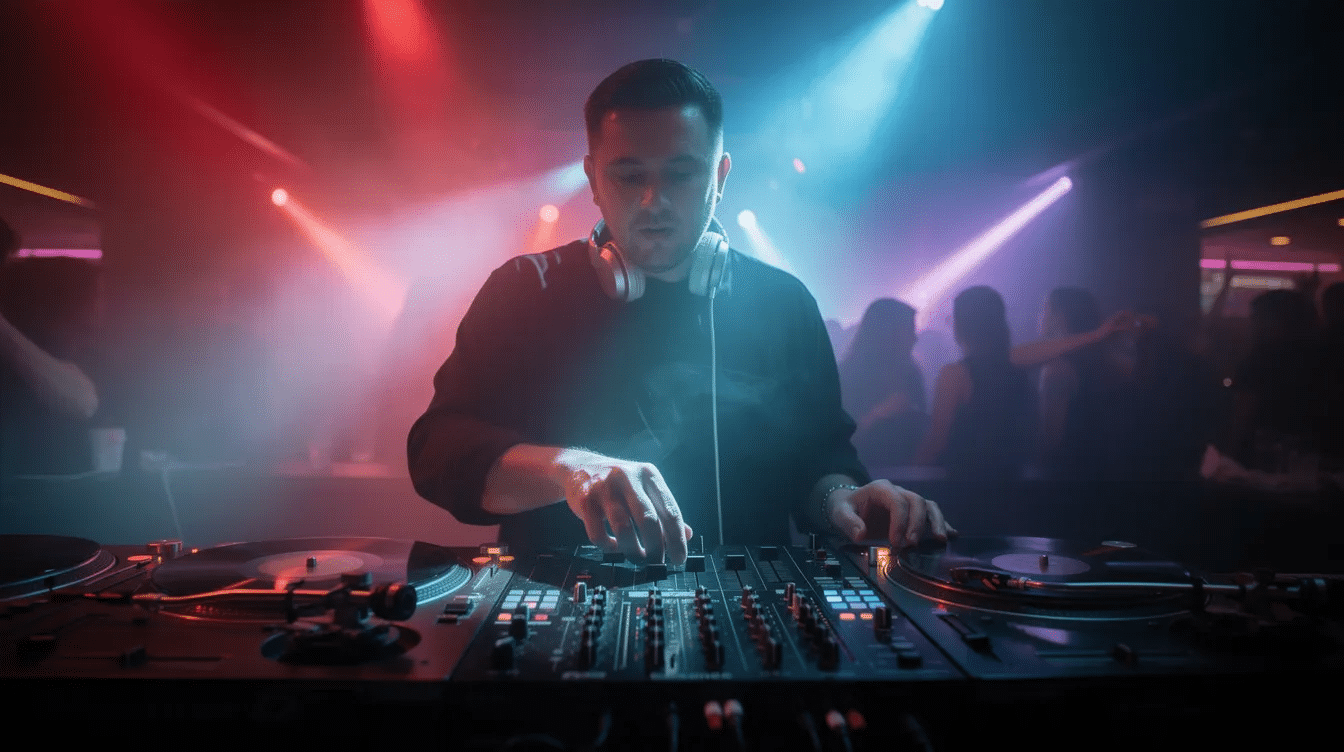
Club DJing represents the classic image: playing house, techno, drum & bass, or hip hop in bars and nightclubs to packed dance floors.
Typical responsibilities span warming up the room at 10 pm, delivering peak-time sets at 1-3 am, and sometimes closing the night as energy winds down
Core skill focus includes tight beatmatching (manual pitch adjustment to ±0.1 BPM accuracy), creative layering via effects, and intuitive crowd reading
Venues range from 100-capacity bars to 2,000-capacity clubs, each demanding different energy management
Most club DJs work freelance, balancing 2-4 weekly gigs while chasing residencies in local venues or regional circuits
The lifestyle demands stamina: late nights, noise exposure (mitigate with custom earplugs), and often daytime recovery
Radio & online DJ
Traditional FM radio DJs differ significantly from online station hosts on platforms launched since 2010, like NTS and community radios that have democratized broadcast access.
Core skills include speaking on the mic with proper timing, music curation across music genres, and basic studio equipment operation
Radio DJs often simulcast on YouTube or Twitch and upload shows to Mixcloud within 24 hours of broadcast
Beatmatching matters less here than storytelling, consistency, and deep knowledge of new releases from the Beatport charts
A typical routine involves Friday prep (playlist finalisation), Saturday 2-hour live show with chat engagement, Sunday editing and upload
Initial audiences range from 50 to 500 viewers, with monetisation averaging modest donations for beginners
Wedding & mobile DJ
Wedding DJs and mobile DJs bring their own sound system, lights, and controller to private events like weddings, birthdays, and corporate parties.
Sets are “open format”—from 1980s pop and 1990s R&B to current Top 40 and afrobeats, depending on client requests
Practical logistics include loading gear into a car or van, arriving two hours before guests, sound-checking, and acting as MC for key moments, with a wedding DJ often leading the reception flow as both entertainer and master of ceremonies
This path can be profitable shortly if you build a strong local reputation through platforms like Google reviews or The Knot
Payment ranges widely, but beginners can reach consistent bookings at solid rates through reliability over flair
Bedroom DJ
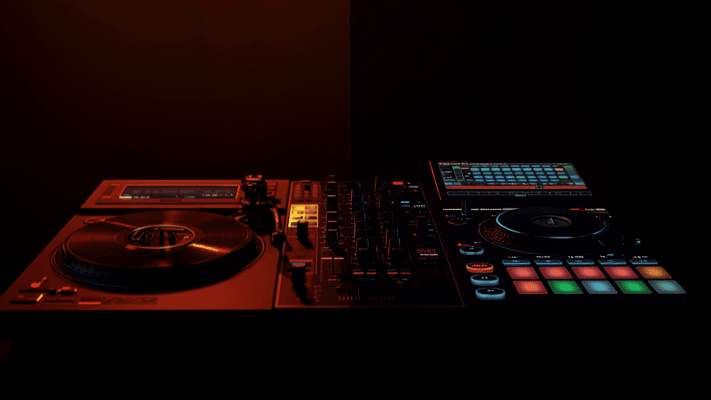
Bedroom DJs practise and record at home, streaming on Twitch, YouTube, or TikTok Live instead of playing physical venues.
Many DJs between 2020-2024 grew followings through livestreams during lockdowns, with some transitioning to clubs after reaching 10k followers
Benefits include low pressure, flexible hours, and time to experiment with niche sounds like lo-fi house, UK garage, or amapiano
Challenges exist: monetisation is slower, and growth depends on regular streaming schedules and genuine audience engagement
A typical digital setup includes a laptop, an entry-level controller like the Pioneer DDJ-FLX4, and good DJ headphones
DJ/producer hybrid
DJ/producers both create tracks in a DAW (Cubase, Ableton Live, FL Studio, Logic Pro) and perform them in DJ sets: a powerful combination for DJ career advancement, especially if you follow a structured path like a comprehensive Cubase house‑production course.
Examples from mid-2020s electronic scenes include Peggy Gou (deep house/techno), Charlotte de Witte (techno), and Fred again.. (UK garage/electronic)
Producing music and releasing consistently on labels amplifies bookings 2-3x after 1-3 years, as proprietary tracks differentiate artists in competitive festival circuits
Music production remains optional for starting: focus on basic DJ skills first, then explore production as a natural next step
Many music producers who become DJs find their bookings and fees increase substantially once they have originals to play
Planning your DJ path before you buy gear
Clarity on goals saves time and money when buying DJ equipment (or ANY audio equipment, generally). Before purchasing anything, answer these questions in a notebook or notes app.
Ambition level: Are you aiming for occasional house parties, becoming a local club regular, or touring as a DJ within 3+ years?
Genre focus: Which 1-3 genres genuinely excite you? Techno, afro house, UK drill, commercial music, or open-format party sets?
Format choice: Vinyl records for tactile skill and digging, digital controllers for affordable learning, or club-standard CDJs for venue readiness?
Time investment: How many hours weekly can you realistically commit over the next 12 months?
How far do you want to take DJing?
Spell out your realistic target for the next 12-18 months rather than making commitments that last forever.
Hobbyist (friends’ parties): 3-5 hours weekly, indefinitely (perfect for playing at your own party or social gatherings)
Semi-pro (local bars/clubs): 10-15 hours weekly, building toward regular gigs in 6-18 months
Career DJ (touring, festivals): 20+ hours weekly with a 2-5 year timeline to meaningful income
Write down a clear, time-bound goal like “play my first bar set by December 2026.” This specificity prevents endless preparation without action.
Choosing your musical style
Pick 1-3 core genres that genuinely excite you instead of trying to play everything: your musical style becomes your identity.
House/tech house/disco: 120-128 BPM, club-focused, strong in most urban scenes
Drum & bass/jungle: 170+ BPM, high energy, dedicated communities in the UK and Europe
Hip hop/afrobeats/Latin: 90-110 BPM, versatile for parties and commercial music settings
Pop/EDM/Top 40: Variable BPM, essential for wedding and mobile DJ work
Spend a dedicated weekend exploring playlists on Spotify, Apple Music, or Beatport charts from 2023 till now to find what resonates. Niche sounds like UK garage or Amapiano can open specific local scene doors faster than trying to compete in saturated markets.
Vinyl, CDJs, or controller?
Three main formats exist for DJs’ play setups, each with distinct advantages.
Controllers (Pioneer DDJ-FLX4, Numark Mixtrack): Two jog wheels + mixer in one USB unit, ideal for home learning. Many DJ controllers combine the functions of a traditional DJ mixer with deck controls in one unit, which makes them especially versatile for digital setups. The Pioneer DDJ-FLX4 retails at approximately $349 / €329. The Numark Mixtrack Pro FX starts around $199 / €189. Best starting point for most beginners.
CDJ-style players (Pioneer OPUS-QUAD): Club-standard media players, USB-ready. The Pioneer OPUS-QUAD all-in-one system retails at approximately $3,699 / €3,499. Essential once you’re gigging regularly, but a significant investment for home practice.
Turntables (Technics SL-1200MK7): The current production standard for vinyl DJing retails at approximately $700 / €650 per unit — you’ll need two plus a mixer. Best for those drawn to hip hop, funk, or dedicated crate-digging culture.
(Note: prices are approximate as of early 2026 and vary by retailer and region — always verify with your local dealer or the manufacturer’s official site before purchasing.)
Most beginners start with a controller like Pioneer DDJ-FLX4, a Traktor Control, or Numark Mixtrack, then learn club CDJs once bookings require it.
Essential DJ skills to master first
Beginners should focus on fundamentals before advanced tricks like scratching. These core skills transfer across all equipment and venues.
Count Music: On a 4/4 time signature, counting beats and bars is essential (like maintaining balance when walking)
Beatmatching: Aligning BPM and phase so rhythms sync perfectly
Phrasing: Understanding song structure to drop tracks at natural musical moments
Gain control: Matching perceived loudness between tracks
EQing and FX: Surgically blending frequencies and adding subtle flavour
Over three decades of playing and teaching, I’ve noticed that almost every DJ (regardless of genre or format) moves through three distinct stages:
Stage 1 — Sync Dependency: You rely on the sync button and visual waveforms to align tracks. This is fine as a starting point, BUT use it as a training wheel, not a permanent crutch.
Stage 2 — Manual Control: You start matching BPM by ear, catching drift before it becomes a problem, and making instinctive EQ decisions. This is where real DJ skill lives.
Stage 3 — Creative Mixing: Beatmatching becomes automatic. Your mental bandwidth is now free to focus on track selection, energy management, and crowd reading — the things that actually make or break a set.
Most students spend 3–6 months in Stage 1, another 6–12 months moving through Stage 2, and begin tasting Stage 3 around the 18-month mark — assuming consistent practice. Don’t rush the stages. Each one builds the one after it.
Daily or weekly practice routines accelerate progress: 20-30 minutes on beatmatching only, then recording mixes every fortnight to track improvement.
Beatmatching
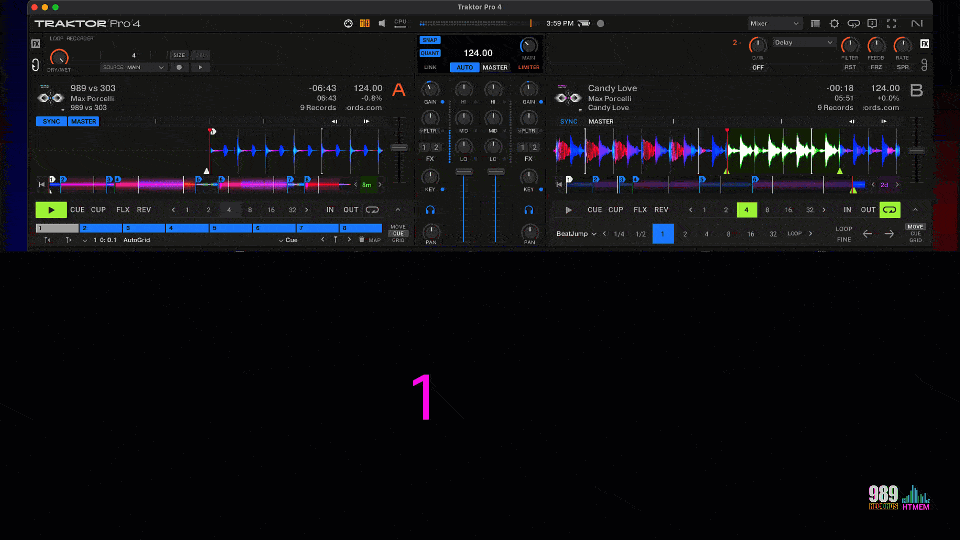
Beatmatching means aligning the BPM and phase of two tracks so kick drums hit together—the foundational skill that separates a good DJ from someone just pressing play.
Learn manual beatmatching first using pitch faders and jog wheels: nudging a 124 BPM house track to sync with another until kicks align perfectly
Use sync as a training tool to check your work, not as a permanent crutch
Visual waveforms in modern DJ software (Serato, Rekordbox, Traktor) help beginners understand alignment
Daily exercise: Select two tracks close in tempo (122-126 BPM), start mixing, and spend 15 minutes adjusting until they lock together naturally
Phrasing and structure
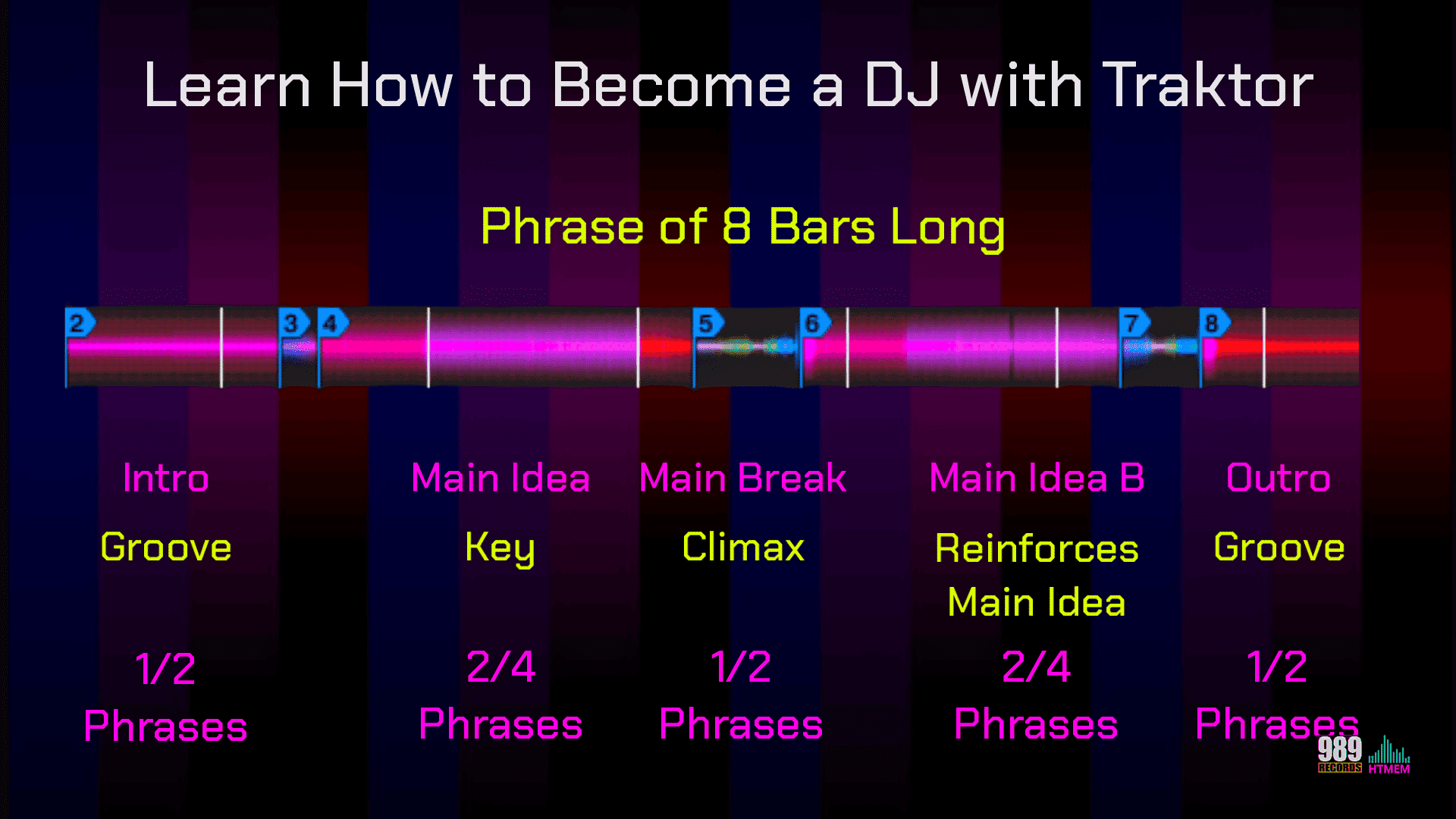
Musical phrasing (bars, 4/8/16-bar sections) determines why dropping tracks at the right moment makes mixes feel professional rather than jarring.
Count 1-2-3-4 along with tracks, noticing where drums, breakdowns, and drops change—most electronic music theory follows predictable patterns
Mainstream EDM and house music typically feature 16-bar builds followed by drops
Simple exercise: Line up the start of a new phrase on the first beat of a 16-beat section of the playing track—this creates natural, seamless transitions
Understanding harmonic mixing (matching musical keys) comes later, but it builds on this foundation
Gain control and volume balance
Gain (trim) and channel faders control perceived loudness—matching levels between tracks prevents jarring volume jumps that clear the dance floor.
Use mixer LEDs as a guide: avoid redlining (staying in the red zone), which causes distortion
Practice method: Record a mix, listen back on headphones, and adjust levels until no track sounds obviously louder or quieter
Good gain staging protects speakers, preserves your hearing, and keeps sound engineers happy at real venues
EQing and basic FX
Three-band EQ (low, mid, high) allows surgical track blending: the key to professional-sounding transitions.
Cut bass on the outgoing track before bringing in bass on the incoming track to avoid a muddy low-end clash
Overusing effects (echo, reverb, filters) ruins mixes: start mixing with zero FX, then add just a filter for flavour once comfortable
Many modern DJ mixers, since 2018, share similar EQ layouts, so skills transfer to club gear
Exercise: Practice one full session using only EQ for transitions, no effects at all
In my experience, and echoed by virtually every club resident I’ve worked with and many house and electronic artists on 989 Records, the fastest way to sound like an amateur is to overuse effects. A filter sweep used once in a set is elegant. Used five times in a set, it becomes a nervous habit that the crowd notices. I tell my students to practice entire sessions with zero effects — just EQ and faders. Once that sounds clean, earn the right to add one effect. The discipline of restraint is what makes the moments when you do use FX hit harder.
Building your first DJ setup on a budget
You can start DJing in 2025 without spending thousands. Entry-level setups with quality equipment deliver great sound quality for learning and recording mixes, and you can even build your collection with free house music track downloads from reputable labels. Managing a digital music library is essential, as it allows you to organize, access, and mix your tracks efficiently.
Laptop: Recent multi-core CPU, at least 8GB RAM, SSD storage to avoid audio glitches. A laptop is often necessary for DJs to download and organize their digital music before exporting it to a USB.
Controller: Entry-level USB unit with jog wheels and built-in mixer
Headphones: Closed-back for isolation
Speakers/monitors: Small powered speakers or studio monitors for practicing
Software: Free versions or intro tiers bundled with controllers
Upgrade gradually as bookings and skills grow—there’s no need to acquire all the gear immediately.
Laptop and DJ software
Minimum laptop expectations in 2025 include a post-2020 machine with a multi-core CPU, 8GB+ RAM, and SSD storage for glitch-free performance during digital djing.
Serato DJ Lite: Free, excellent for beginners, bundled with many controllers
Pioneer Rekordbox: Free plan supports basic performance mode and track analysis
Native Instruments Traktor: Industry standard with powerful features
VirtualDJ and Engine DJ: Additional options depending on controller compatibility
Many controllers include software licenses, so check before purchasing separately. A typical beginner path: rekordbox free + entry-level Pioneer controller.
DJ controller vs CDJs vs turntables
Understanding differences helps you choose the right starting point.
Controllers (Pioneer DDJ-FLX4, Numark Mixtrack): Two jog wheels + mixer in one USB unit, ideal for home learning, $300 entry point
CDJ-style players (Pioneer OPUS-QUAD): Club-standard media players, USB-ready, essential once you’re gigging, but expensive for beginners
Turntables (Technics SL-1200): Classic vinyl setup for those drawn to hip hop, funk, or dedicated crate-digging culture; turntablists often use two or more turntables with a mixer for more hands-on sound manipulation
My honest advice from years of teaching: start on a controller, but visit a venue’s booth as soon as you can. The first time I put a student behind a pair of Pioneer CDJ-3000s after they’d been practicing on a DDJ-FLX4, the layout felt alien for about 20 minutes — and then clicked. The muscle memory transfers. What doesn’t transfer automatically is confidence in a high-stakes environment. So get behind club gear at open-deck nights or ask a resident DJ if you can try the booth during soundcheck. That kind of real-world exposure is worth more than any amount of bedroom practice.
For most aspiring DJs, controllers offer the best value for learning before encountering club gear at venues.
Headphones and speakers
Closed-back DJ headphones isolate sound in loud environments—essential for cueing tracks.
Look for swivel ear cups, replaceable parts, a comfortable headband, and a clear mid-range for accurate beat-matching.
Studio monitors on stands work best for home practice; position them away from walls to avoid bass buildup
In small apartments, you can start djing with good headphones only—add speakers later
Building and organising your music library
Your track selection in 2025 matters more than flashy tricks—your extensive music library and taste form your main identity. In the digital age, building and maintaining a digital music library using online platforms and streaming services is essential for modern DJs. Start mixing with a manageable collection of 50-150 tracks in your chosen genres. Building a diverse music library allows you to adapt to different crowds and events, enhancing your DJ performances.
Digital stores: Beatport, Bandcamp, Traxsource, and label pages offering free house tracks for high-quality downloads
Music streaming integrations: Beatport Streaming, TIDAL integration in some dj apps
DJ pools: Monthly subscription services for club-ready tracks across genres
Local record shops: Essential for vinyl collectors, especially in larger cities
Organise metadata carefully: track naming, genre tags, energy levels (1-5 scale), and playlists/crates for warm-ups, peak time, and closing.
Where to find music in 2025
Build your music library from legitimate sources to support other artists and labels.
Beatport: Premier source for electronic genres, high-quality downloads, and detailed metadata, complemented by label catalogues like 989 Records where you can follow artists you love
Bandcamp: Support independent labels and artists directly, discover unique sounds
DJ pools (DJ City, BPM Supreme): Monthly subscriptions for club-ready promos across multiple genres—excellent for open-format DJs
SoundCloud and Audius: Discover emerging artists, remixes, and edits—check licensing and usage rights carefully
Local record stores: Essential for vinyl record collectors; digging develops unique musical ideas
Organising crates and playlists
Create playlists or “crates” by mood, energy, and time of night—this organisation saves you during high-pressure sets.
Categories: Warm-up, peak time, after-hours, and “emergency crowd-pleasers.”
Tags: BPM, key, genre, energy rating (1-5), comments like “big breakdown” or “good opener.”
Hot cues: Mark key moments within tracks for quick access during performance
Use Rekordbox or similar software to manage everything consistently
Back up your library regularly (external drive or cloud) to avoid losing months of curation work
Developing your sound, brand, and identity
Musical taste connects with visual style and personal identity—how you look, sound, and present yourself online and on flyers determines how people remember you.
Define your sound: List 3-5 artists or labels you love and use them to guide selections without direct copying—for example, studying how veteran producers like Havour in organic and progressive house evolve their sound over decades
Choose a DJ name: Check social handles and domain availability; avoid names already used on Spotify or Beatport
Visual branding: Simple logo, colour palette, and consistent imagery for profile pictures, cover art, and event flyers
Defining your musical identity
Pick a clear musical lane that matches your goals and local scene—deep melodic techno, UK garage, amapiano, or open-format party sets.
Study dj sets from festivals like Tomorrowland or Boiler Room sessions from 2019-2024, or listen to live Café Mambo Ibiza sessions, to understand how a successful DJ builds narrative arcs
Exercise: Create a 20-track “signature sound” playlist representing how you want to be known by mid-2026
Let your musical understanding evolve naturally—your taste will refine as you discover new sounds
Creating your DJ name and visuals
Your DJ name becomes your professional identity—choose carefully.
Brainstorm 20 potential names, then check for clashes on Google, Instagram, Beatport, and Spotify
Shorter, memorable names are easier to print on flyers and recall after a night out
Use basic design tools like Canva to create a logo, banner, and unified colours within one month of deciding the name
Consistency matters more than complexity—other DJs with strong brands maintain the same visual identity everywhere
Practising, recording, and sharing your first mixes
Progress comes from recording mixes regularly, not endless solo practice without listening back. Recording forces you to perform complete sets and reveals mistakes you’d otherwise miss.
Structure practice into drills (isolated skills) and performance (recorded sets)
Record 30-60 minute mixes at home using built-in software recorders
Share on online platforms suited to 2025: SoundCloud, Mixcloud, YouTube, or even specialised monthly house radio shows if you get invited as a guest
Set a concrete date: Upload your first practice mix within 30 days of starting
Designing effective practice sessions
Split one-hour sessions into focused segments that build specific skills at your own pace.
15 minutes: Beatmatching drills with similar BPM tracks
15 minutes: Phrase mixing—nailing transitions at natural musical moments
30 minutes: Free mixing and experimentation with your signature playlist
Use a timer and a written checklist to keep practice focused and measurable
Rotate through genres or BPM ranges across the week to build versatility
Recording and reviewing your sets
Basic steps transform practice into documented progress.
Record inside the DJ software and export to WAV or high-quality MP3
Listen back the next day on headphones or in a car—take notes on mistakes like clashing keys, bad phrasing, or volume jumps
Save mixes by date (e.g., “2025-05-12_practice_set”) to track improvement over months
Self-critique positively: note what worked alongside what needs improvement
Sharing mixes online
Different platforms serve different purposes for your musical journey.
Mixcloud: Full shows, copyright-lenient, tracklists supported
SoundCloud: Shorter promotional mixes, good for clips and sample packs of your style
YouTube: Audio with simple visuals or performance videos, broader reach
Write clear titles, descriptions, and tracklists including genre, BPM range, and recording date. Accept that platforms may mute some tracks—keep backups and don’t let copyright challenges discourage you. Start sharing with friends and the local scene first, then gradually push mixes in niche online communities.
Learning from experienced DJs
One of the fastest ways to improve your DJ skills and avoid common pitfalls is to learn directly from other DJs who have already walked the path. Many experienced DJs generously share their knowledge through online tutorials, social media, and live streams. Following renowned DJs and music producers on platforms like YouTube, Instagram, and TikTok can expose you to the latest techniques, creative approaches, and industry standards.
Don’t hesitate to join DJ forums, attend local workshops, or participate in online communities where DJs exchange tips and feedback. These spaces are invaluable for asking questions, getting advice on DJ equipment, and staying inspired by the journeys of others. If possible, attend DJ meetups or conferences to network in person and see how professionals handle their sets, or study recorded Ibiza studio sessions from working DJs to see how they structure mixes. By observing and interacting with other DJs, you’ll accelerate your learning curve, pick up practical DJ tips, and start developing your own unique style.
Growing your reputation: networking and first gigs
Technical skills form only half your DJ career—relationships and reliability bring real-world opportunities. Every touring DJ built their network through consistent presence and professionalism.
Network locally: Attend nights you’d love to play, talk to promoters after sets, support other DJs
Build online presence: Consistent posts, clips from practice sets, engagement with followers
Land first gigs: House parties, community events, early slots at bars, open-deck nights, and eventually label‑hosted events and club bookings
Be professional: Arrive early, promote events you’re booked on, and be easy to work with
Online presence and self‑promotion
Start with 1-2 platforms (Instagram and TikTok work well) instead of trying to be everywhere at once.
Post regular content: short mix clips, track recommendations, behind-the-scenes practice shots, upcoming gig announcements
Create a simple one-page website or link-in-bio hub connecting to mixes, contact email, and upcoming shows
Authenticity and consistency outperform chasing viral trends—show genuine musical talent and passion
Networking in your local scene
Visit local clubs, bars, and record stores regularly to understand what DJs play and who runs events.
Introduce yourself respectfully to promoters and resident DJs after sets, not during busy moments
Offer to record warm-up mixes for nights or help with promotion in exchange for an early slot
Realistic timeline: landing a first bar set within 6-12 months of consistent networking is achievable
Remember that other stuff, like reliability and friendliness, matter as much as your mixing ability
Getting and preparing for your first gig
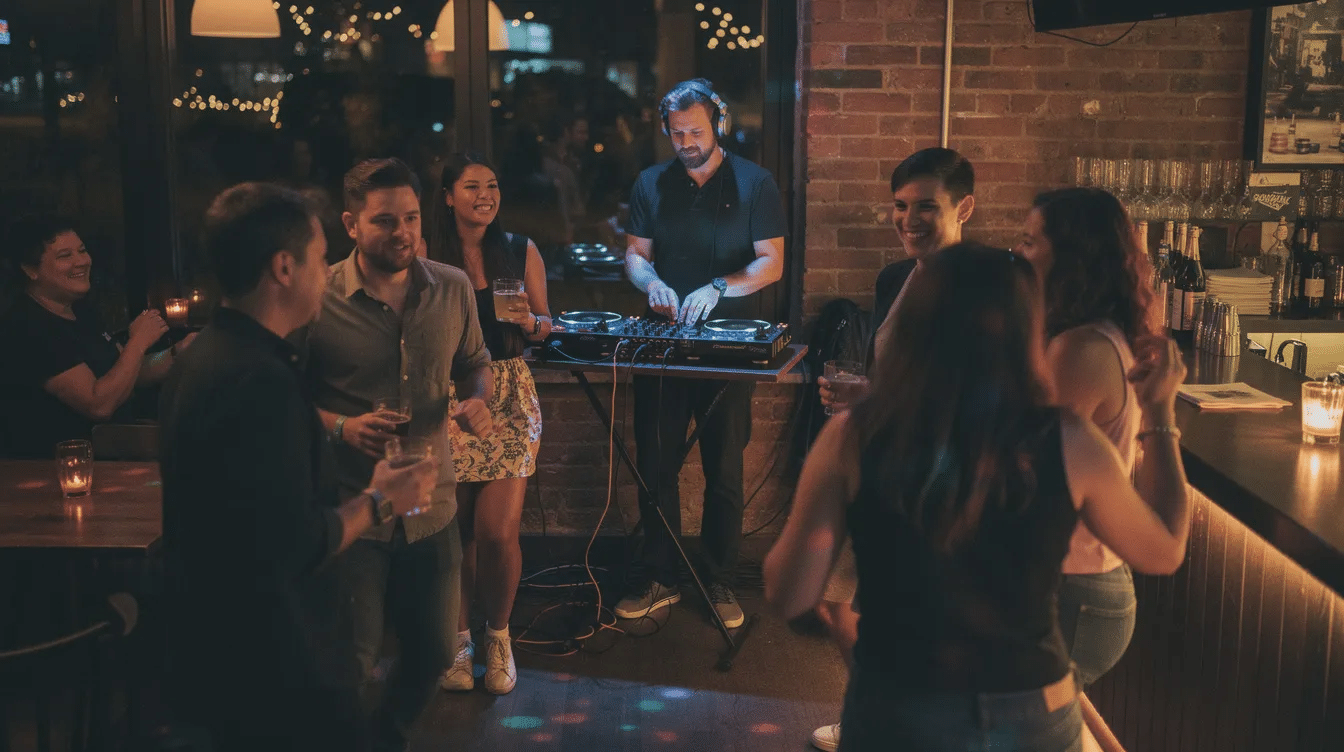
Common entry points include house parties, student events, open decks, small bars, and early-evening warm-up sets.
My first real gig outside of private parties happened after about eight months of consistent practice. I’d been posting monthly mixes online, helping promote a small Friday night at a local bar, and showing up to other DJs’ sets without asking for anything in return — just being present and useful. One Friday, the warm-up DJ cancelled two hours before doors. The promoter called me because I was reliable and had a USB ready. I played for two hours with 30 people. I made every mistake possible: a train-wreck transition in the first 20 minutes, a dead moment when I miscued a track, one very wrong EQ decision that made the room sound underwater for 30 seconds. And I loved every second of it. That gig led directly to a monthly residency. The lesson: be ready before the opportunity arrives, because opportunities don’t announce themselves.
Preparation checklist:
Confirm equipment at venue—will you use their gear or bring your own digital setup?
Test USBs or laptops beforehand, pack cables and backups
Create a dedicated playlist for the night with more tracks than you’ll need
Arrive 30-60 minutes early, check volume levels with the sound engineer
Plan your first and last tracks—strong openers and closers frame your set
After the gig: Write down what went well and what to improve for future sets. Every set teaches you something.
Staying up-to-date with industry trends
The music industry is always evolving, and staying current is essential for anyone serious about their DJ career. New music production tools, DJ software updates, and innovative DJ equipment are released regularly, shaping how DJs play and produce music. To remain a successful DJ, make it a habit to follow industry leaders, subscribe to music production blogs, and listen to podcasts that discuss the latest trends in digital DJing and the broader music industry.
Engage with online forums and social media groups dedicated to DJing and music production—these communities are often the first to discuss new gear, software features, and emerging music genres. Attending conferences, workshops, or even virtual events can also keep you informed and connected. By staying up-to-date, you’ll be able to adapt your sets, expand your skill set, and ensure your sound remains fresh and relevant in a competitive landscape.
Staying motivated and evolving as a DJ
Progress can feel slow, especially in the first 6-18 months. Persistence matters more than perfection—every successful DJ experienced plateaus and doubts before breakthrough moments.
Set realistic milestones: First recorded mix (30 days), first 1-hour set without major mistakes (3 months), first paid gig (6-12 months), first out-of-town booking (12-24 months)
Continue learning: Follow tutorials, attend workshops, and collaborate with other DJs to share techniques and sample packs of production knowledge
Explore extensions: Music production, radio shows, or event promotion become natural extensions of DJing after the first couple of years—consider learning a digital audio workstation as a musical instrument for your creativity
Commit now: Book one practice session this week. Upload your first mix within 30 days. Take one concrete step toward becoming a disc jockey today.
The path from beginner dj to playing real venues is well-established. Download free software, build your first playlist, and start mixing this week. Your future self will thank you for starting now.
Conclusion
A note on how this guide was made: Everything in this article comes from my own experience as a working DJ and music educator — from bedroom practice in Italy in the 1990s to club nights, Ibiza radio, and teaching thousands of students on Udemy and in live workshops. Where I reference specific gear, I’ve checked specifications directly against manufacturer documentation. Gear prices are listed in both USD ($) and EUR (€) to reflect where most of my readers are — prices vary by region and retailer. I’ve tried to avoid vague claims and call out when data is approximate. If you spot something outdated or inaccurate, the contact form is always open. This guide is updated regularly — last revision: April 2026.
In conclusion, building a successful DJ career in today’s music industry requires more than just technical know-how—it’s about passion, persistence, and continuous growth. Start by honestly assessing your love for music and experimenting with different genres and DJ software to find your unique sound. Learn from experienced DJs, both online and in your local scene, to accelerate your progress and avoid common mistakes. Stay up-to-date with the latest trends in music production, DJ equipment, and industry standards to keep your skills sharp and your sets exciting.
Whether you’re a beginner DJ or aiming to become a touring professional, invest in quality DJ equipment, develop your musical skills, and build a strong online presence to connect with fans and promoters. Listening closely to modern remixes—like contemporary house reworks of classic songs—can also teach you how timeless melodies are reshaped for today’s dancefloors. The journey from aspiring DJ to successful DJ is filled with learning, creativity, and community. Stay focused, keep practicing, and embrace every opportunity to share your music with the world. With dedication and the right mindset, you can carve out your place in the ever-evolving world of DJing.
Frequently Asked Questions
How long does it take to learn to DJ?
Most beginners can mix two tracks cleanly within a few weeks of daily practice. Getting comfortable enough to play a full set in front of people usually takes two to three months of consistent, recorded practice sessions.
Do I need expensive equipment to start DJing?
No. A free software trial like Rekordbox or Serato DJ Lite and an entry-level controller around $300/€280 cover everything you need to learn the core skills. Better gear matters later, not at the start.
Should I learn manual beatmatching if sync does it for me?
Yes. Sync keeps tracks aligned, but manual beatmatching teaches you to hear phrasing, drift, and timing, skills that carry into every other part of mixing, including reading a crowd.
Do I need to produce my own music to become a DJ?
No, production is optional early on. Many DJs build a career on selection and mixing alone; producing original tracks becomes useful later, when it is time to stand out in a saturated lineup.
How do I get my first DJ gig?
Start local: offer to play a friend’s party, a bar’s slow night, or an open-format wedding. Record every set, use it as a demo, and follow up with venues directly rather than waiting to be discovered.
Artist Background – Authr
At 989 Records, we’re proud to present an intimate conversation with Authr as he unveils his latest Organic House album, “Skysill.” From his early days in Dhaka, discovering music through VHS tapes to shaping a distinct sound that bridges emotion and rhythm, Authr’s journey is one of persistence, evolution, and [...]| Play | Cover | Release Label |
Track Title Track Authors |
|---|